Garden Soil Guide: How to Test, Improve, and Build Healthy Soil
Great gardens start with great soil. You can buy the best seeds and the priciest fertilizers, but if your soil is compacted, depleted, or the wrong texture, your plants will always struggle. Understanding and improving your garden soil is the single highest-impact thing you can do to grow healthier, more productive plants. This guide explains soil types, testing, amendments, and how to build living, fertile soil that keeps giving year after year.
Think of soil not as inert dirt but as a living ecosystem you are cultivating. Feed and protect it well, and it will do most of the hard work of gardening for you.
Why Soil Health Matters
Soil is a living ecosystem teeming with bacteria, fungi, and earthworms that feed your plants in ways synthetic fertilizer cannot replicate. Healthy soil holds the right balance of water, air, and nutrients and supports strong, far-reaching root systems. Invest in your soil and you reduce the need for fertilizers and pesticides, saving money while producing bigger, tastier harvests. Poor soil, by contrast, means constant inputs and disappointing results.
Understanding Soil Types
Every soil is a blend of three particle sizes, and the mix determines how it behaves:
- Clay: Holds nutrients and water well but drains poorly and compacts easily.
- Sandy: Drains fast and warms quickly but loses nutrients and dries out.
- Silt: Fertile and moisture-retentive but prone to compaction.
- Loam: The ideal balance of sand, silt, and clay—every gardener’s goal.
A simple test: squeeze a handful of moist soil. If it forms a sticky ball, it is clay-heavy; if it crumbles apart immediately, it is sandy; if it holds shape but breaks easily, you have good loam. Knowing your type tells you exactly what to improve.
Testing Your Soil and Adjusting pH
Before amending, test your soil. Home kits cost $10–$25 (£8–£20) and check pH and basic nutrient levels. For detailed results, mail a sample to a lab for $20–$50 (£16–£40). Most vegetables and flowers prefer a pH of 6.0–7.0, where nutrients are most available. Knowing your starting point prevents wasted money on the wrong amendments.
If your soil is too acidic (low pH), add garden lime to raise it. If it is too alkaline (high pH), add elemental sulfur or peat to lower it. Make adjustments gradually over seasons and re-test, since pH swings slowly and overcorrection can harm both plants and soil microbes.
The Power of Organic Matter
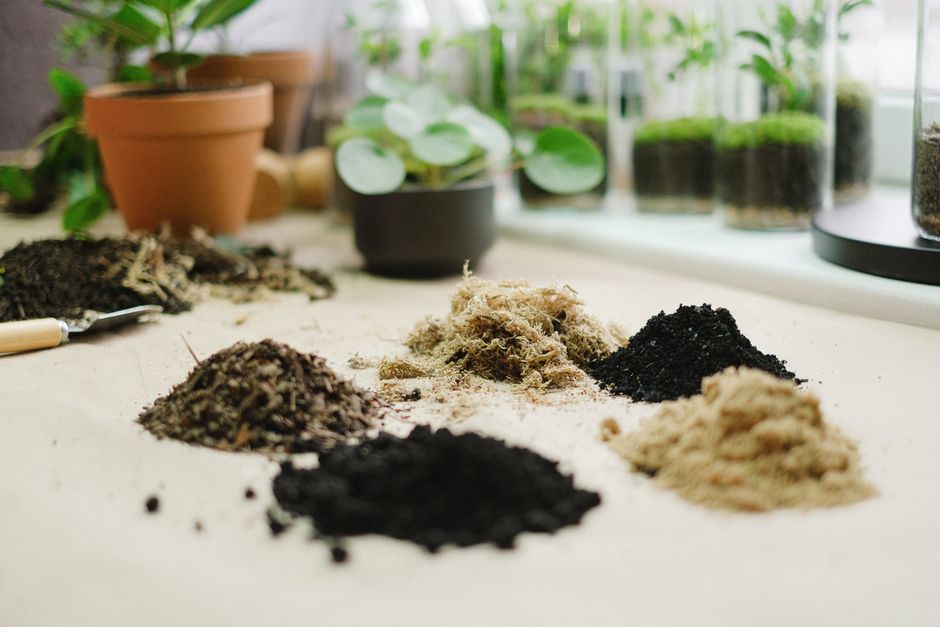
The universal soil improver is organic matter—compost, aged manure, leaf mold, and cover crops. It loosens heavy clay, helps sand hold water, feeds soil life, and slowly releases a broad range of nutrients. Adding 2–4 inches of compost annually transforms poor soil into rich, crumbly loam over just a few seasons. There is no single amendment that does more good, and you can make much of it yourself for free.
Improving Drainage and Structure
- Heavy clay: Add coarse compost and grit, and never work it while wet.
- Sandy soil: Add compost and mulch to boost water and nutrient retention.
- Compaction: Loosen with a broadfork rather than repeated heavy tilling, which harms structure.
- Persistent waterlogging: Consider raised beds, which give you perfect soil above problem ground.
Good structure—the way soil particles clump into crumbs with pockets of air and water—is what lets roots breathe and moisture move. Protecting that structure is as important as adding nutrients.
Feeding the Soil, Not Just the Plants
Modern soil science favors building lasting fertility rather than repeatedly dumping synthetic fertilizer. Mulching, adding compost, and planting cover crops like clover, vetch, or field peas nourish soil microbes and add nitrogen naturally. This “feed the soil” approach creates a self-sustaining system that needs fewer external inputs each year and grows more resilient over time. Synthetic fertilizers have their place for quick fixes, but they do nothing to build the living soil that sustains long-term productivity.
Protecting Soil Year-Round and Avoiding Mistakes
Bare soil erodes in rain, bakes in sun, and loses its life. Keep it covered with mulch or plants at all times. In the off-season, sow a cover crop or spread a thick layer of leaves and straw to protect structure, suppress weeds, and feed earthworms through winter, so spring beds are ready and fertile.
Avoid the common mistakes that undo good work: over-tilling, which destroys structure and beneficial fungi; working soil when it is soggy, which causes compaction; ignoring pH and guessing at amendments; and relying on synthetic fertilizer while neglecting organic matter. Steer clear of these and your soil will steadily improve.
Understanding Soil Life and Nutrients
Beneath the surface, healthy soil hosts billions of organisms per handful—bacteria, fungi, protozoa, nematodes, and earthworms—that together form the soil food web. Beneficial fungi called mycorrhizae form partnerships with plant roots, extending their reach and helping them absorb water and nutrients in exchange for sugars. Earthworms tunnel through the soil, aerating it and leaving behind nutrient-rich castings. This underground ecosystem does work that no bag of fertilizer can replicate.
You nurture this life by adding organic matter, avoiding excessive tilling and synthetic chemicals, and keeping the soil covered and moist. In return, the soil food web releases nutrients steadily, suppresses many diseases, and builds the crumbly structure that plants love. Understanding that you are cultivating a living system—not just a growing medium—changes how you garden and leads to healthier, lower-input beds over time. The more you feed the life in your soil, the less your plants will ever need from you.
Conclusion
Healthy soil is the foundation of every thriving garden. By understanding your soil type, testing before you amend, adding generous organic matter, protecting structure, and keeping the ground covered, you build living, fertile soil that rewards you with vigorous plants and abundant harvests. Treat your soil as the living resource it is, and it will do the heavy lifting of gardening for you—season after season.