Backyard Privacy Fence Ideas and Costs for 2026
Backyard privacy fence costs is an important topic for homeowners, and this guide covers it in detail. Privacy is one of the most requested features in any backyard. A good privacy fence blocks unwanted views, muffles neighborhood noise, keeps children and pets safely contained, and defines your property with a clean, finished edge. But choosing the right fence means balancing cost, materials, maintenance, and local rules. In 2026, options range from budget-friendly wood to premium composite and living green screens. This guide breaks down the best privacy fence ideas, realistic costs, and the practical considerations that will help you build the right barrier.
Why Invest in a Privacy Fence
A privacy fence delivers immediate lifestyle benefits. It creates a secluded outdoor room where you can relax, entertain, or let kids play without feeling watched. It reduces street and neighbor noise, adds security by deterring intruders, and gives climbing plants a structure to grow on. A well-built fence also defines property boundaries and improves the look of a yard. For many homeowners, the sense of a private, enclosed retreat is worth the investment on its own.
Privacy Fence Materials and Costs
Material drives both appearance and budget. Here are the leading choices for 2026, priced per linear foot installed:
- Pressure-treated wood — $20 to $45; affordable and classic but needs sealing.
- Cedar — $30 to $60; naturally rot-resistant with rich color.
- Vinyl — $30 to $60; low-maintenance and long-lasting.
- Composite — $40 to $80; durable, wood-look, minimal upkeep.
- Metal or aluminum with inserts — $35 to $70; modern and strong.
For a typical 150-linear-foot backyard fence, budget roughly $3,000 to $12,000 depending on material and height.
Wood Privacy Fence Styles
Wood remains the most popular choice for its warmth and versatility. A solid board or stockade fence offers complete privacy, while a board-on-board design overlaps pickets for privacy from both sides with a more refined look. Horizontal slat fences give a modern, upscale appearance that has surged in popularity. Adding a lattice or decorative topper softens the height and lets in light. Wood invites customization through stain and cap details but requires periodic sealing to resist rot and fading.
Low-Maintenance Vinyl and Composite
If you want privacy without the upkeep, vinyl and composite deliver. Vinyl fencing never needs painting, resists insects and rot, and cleans with a hose, though its color range is limited. Composite blends recycled wood and plastic for a natural wood look with minimal maintenance and impressive longevity. Both cost more upfront than wood but save money and effort over their lifespan, making them a smart choice for homeowners who prefer to install once and forget it.
Living Green Privacy Screens
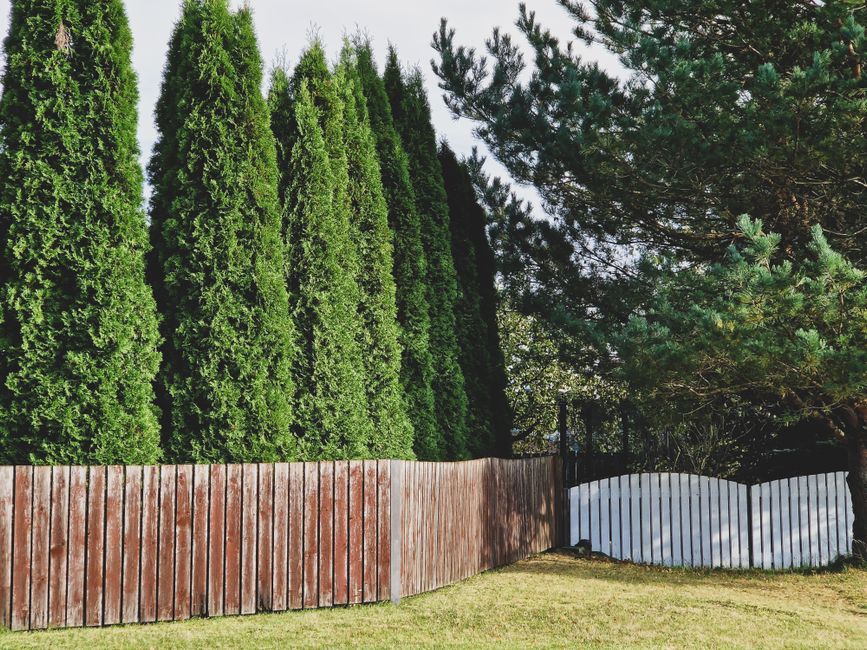
For a softer, natural barrier, living screens combine plants with structure. Fast-growing evergreens like arborvitae, laurel, or bamboo create a lush wall that improves each year, while a trellis clad in climbing vines offers privacy with seasonal flowers. Green screens absorb noise, support wildlife, and cost less upfront than solid fencing, though they take time to fill in and require pruning and watering. Many homeowners pair a modest fence with plantings for the best of both worlds.
Fence Height and Local Regulations
Before building, check local rules, which are easy to overlook. Most residential areas cap backyard fences at six feet, with front-yard fences limited to three or four feet. Corner lots often have sight-line restrictions near driveways. Many jurisdictions require a permit, and homeowners associations may dictate materials and style. Confirm your property lines with a survey to avoid disputes, and talk to neighbors early, since a boundary fence often affects them and can sometimes be shared.
Enhancing Privacy and Style
A few thoughtful touches raise a plain fence into a design feature. A decorative lattice or slat topper adds height and elegance while filtering light. Staining or painting the fence to complement your home ties it into the overall design. Mounting planters, outdoor art, or string lights on the fence turns it into a backdrop rather than a barrier. Layering shrubs and perennials along the base softens the structure and blends it into the garden for a polished, established look.
Privacy Fence ROI and Home Value
A quality privacy fence typically returns 50 to 70 percent of its cost at resale and appeals strongly to families, pet owners, and buyers seeking seclusion. In addition to resale value, a fence can lower insurance considerations around pools and improve daily security and enjoyment. Choosing a durable, low-maintenance material protects that value, since a sagging or rotting fence detracts from curb appeal. For most homeowners, a well-built privacy fence is both a lifestyle upgrade and a sound investment.
DIY Versus Professional Installation
A straightforward wood or vinyl fence on level ground is achievable for a determined DIYer, potentially cutting costs by 40 to 50 percent. Success depends on setting posts plumb in concrete, spacing them correctly, and following property lines and codes. Sloped ground, rocky soil, and long runs quickly become challenging and are often best left to professionals with the right equipment. Whichever route you choose, call to locate underground utilities before digging any post holes.
Conclusion
A privacy fence transforms an exposed yard into a secluded retreat while adding security, noise reduction, and resale value. Weigh materials against your budget and maintenance tolerance, confirm height limits and permits before you build, and add plantings and details to make the fence a design asset rather than a plain wall. Whether you choose classic wood, low-maintenance vinyl, or a living green screen, a well-planned privacy fence will make your backyard feel like a private sanctuary for years.